


The Endless Frontier is regarded as the founding document of American science. But what are its Federalist Papers? They’re scattered throughout history. Found in old arguments over who should ask questions, who should pay, and who decides what they’re worth.
What happens when old questions survive into a new age? Hans Blumenberg called this reoccupation. Old questions don’t disappear, but old answers lose their authority, leaving an opening for a new answer. They are assembled from whatever is lying around at the time.
Let’s approach 1945 from the opposite direction, looking at the shape of ideas leading up to it. How far back should we start? Twenty-five hundred years? After all, our words for science (epistēmē) and technology (technē) come from the Greeks.
Why pursue questions?
If you asked Plato, he would simply respond: because knowledge of the Forms is an ascent towards the Good. It perfects the soul.
Aristotle would take it further. In Book X of the Nicomachean Ethics, theoria is the highest human activity because nous, the human capacity for grasping first principles, is the divine element in us. What it observes through contemplation is eternal, and these objects are the best of knowable things.
In other forms of activity, of the practical variety, we gain something beyond the acting. The desire to build a table results in a table.
Virtues need the world to provide an occasion. Justice needs people to be just towards. Temperance needs temptation to decline. Bravery needs something to be afraid of. Everything we do, we do for the sake of or in relation to something else. This chain has to end somewhere, and contemplation is unique because it reaches its end simply by being exercised. For Aristotle, the highest activity has the least need to justify itself by what it produces.
These values were even embedded in the language. The Greek word scholē, from which we get “school,” meant leisure. Its opposite was ascholia (busyness), the absence of leisure. Work is defined as the absence of the good. It’s what remains when the good thing disappears.
Now you may be thinking to yourself, “wow, sounds like this Aristotle guy wasn’t a big fan of work.” And you’d be right.
Banausic labor, the manual kind you’re paid for, is an obstacle to the good life. The body gets bent. The leisure required for cultivating virtue becomes exhausted. You become tied to necessity and utility. In the Politics, Aristotle even argues that those performing such labor should not be full citizens.
But this was Athens, and some of the men doing that labor were citizens. They voted. The poorest among them rowed the fleet. Potters signed their pots.
And these citizens went to the theater, occasionally poking fun at the ideas from these philosophers. Two generations before Aristotle, the citizens watched Aristophanes hoist Socrates above the stage in a basket, explaining that he had to suspend his mind in the air to think about lofty things. These lofty things included how many of its own feet a flea could jump and whether a gnat hums through its mouth or its rear.
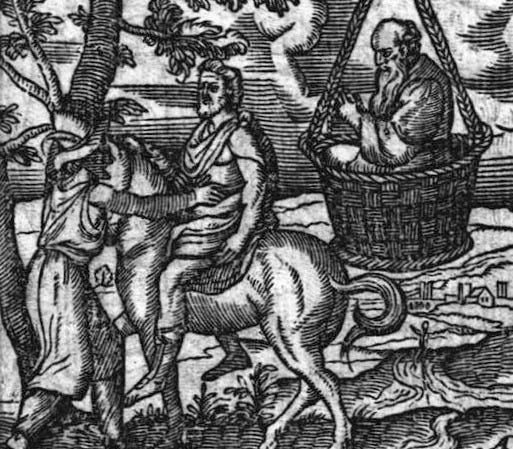
In 423 BC, Aristophanes’ The Clouds came home empty-handed from the City Dionysia festival, losing to both Cratinus's Pytine and Ameipsias’s Konnos, which also lampooned Socrates. He couldn’t catch a break in those years.
So, we should understand this preeminence of contemplation as two things. An honest attempt to say what a human life is for. And a bid, from one competing vision of what Athens ought to admire, to place certain activity above that of everyone else’s.
This wasn’t a defense of scientific research in the modern sense, yet familiar strands are starting to emerge. Distinctions drawn between kinds of knowledge and kinds of knowers. That usefulness is the wrong standard for judging certain activity. And an unease among the populace, in jest or persecution, in this idea.
Why do you want to pursue questions?
Warnings about transgressive knowledge appear throughout myth and scripture. Eve reaches for forbidden knowledge, Lot’s wife looks back, Actaeon sees what he ought not see, and Psyche raises the lamp to look at her husband. Apuleius said what drove her was curiositas.
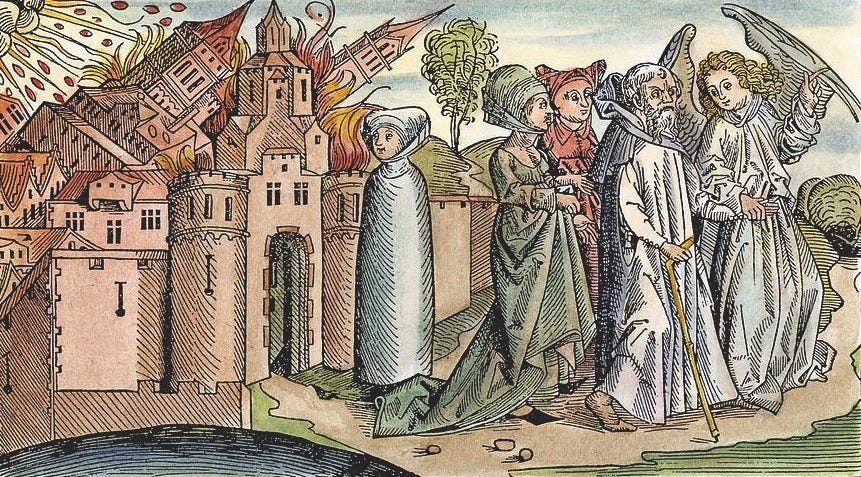
Beyond the social embarrassment of being the subject of satire or cosmic punishment, is there any limit to what we ought to seek to know? Or is the only meaningful demarcation between kinds of activity? Is it polite to ask “why do you want to know?”
Let’s move forward in history a bit. The year 400 or so should do. Augustine installs a moral test on the Platonic hierarchy focused on motive rather than object. Eternal truths, arrived at through contemplation, can be a way of approaching the divine, but they must be ordered.
To Augustine, curiositas is the candidate for the lust of the eyes slot of the three temptations in the First Epistle of John. Curiositas was not simply the desire to know, but the desire to know divorced from the proper end of knowing.
Confessions Book X, by Augustine
Gawking at a car or, in this case, a wagon crash; fascination with strange or marvelous things; learning pursued from pride or vanity; the magical arts. These are all knowledge that distract from God.
The Confessions is a self-audit, addressed to God. Augustine is directing this criticism inward and finding himself wanting: “In this so vast a wilderness, replete with snares and dangers, lo, many of them have I lopped off, and expelled from my heart.”
But if curiosity is so morally perilous, how do we navigate the territory? Aquinas arrives about a millennium later with an answer. Aquinas is writing as both a continuation of Augustine and during a time when the Latin West is recovering Aristotle’s work. He accepts Aristotle’s premise that “all men by nature desire to know,” but also Augustine’s that this desire must be ordered. For Aquinas, the appetite is natural but we must temper it, the same way we do food and drink.
So he named two forms: curiositas, the appetite let off its leash, and studiositas, the same appetite disciplined and ordered toward wisdom, and ultimately God. Accompanying the curiositas are four ways it can be disordered, only one deals with the source of knowledge, like divination or demons.
The others concern its ordering: what we choose to know, why we seek it, and whether the inquiry is proportionate to our capacities.
Two people can study the same thing, ask the same question, and reach the same answer. One of them is exercising a virtue while the other commits a sin.
Three centuries after Aquinas, Francis Bacon wanted the systematic study of nature taken up as serious work, but realized he could not get there without answering for Aquinas, Augustine, and Adam.
What ruined Adam was not natural knowledge, he named every beast of the field, after all, but “the proud knowledge of good and evil.” The Fall was due to man’s attempt at judging like God rather than knowing like a creature.
Bacon reoccupied an idea that was already fifteen centuries old. Paul had said that the invisible things of God are understood through the things that are made. Augustine turned that into a book, or rather two: “It is the divine page that you must listen to; it is the book of the universe that you must observe.” Augustine’s view of this second book was remarkably egalitarian in a way the eventual Royal Society would not be. Anyone, even the illiterate, could observe the universe as a testament to God’s creation.
Bacon wanted nature read for its causal structure, and he wanted the two books distinguished. Scripture could tell us about God; nature could tell us how the created world worked. No one can search too deeply in either book, provided they do not confuse them. In both, aim at endless progress.
Inquiry, the patient and disciplined kind, can then be a form of repair, recovering what the Fall took from man. The relief of man’s estate, and all that.
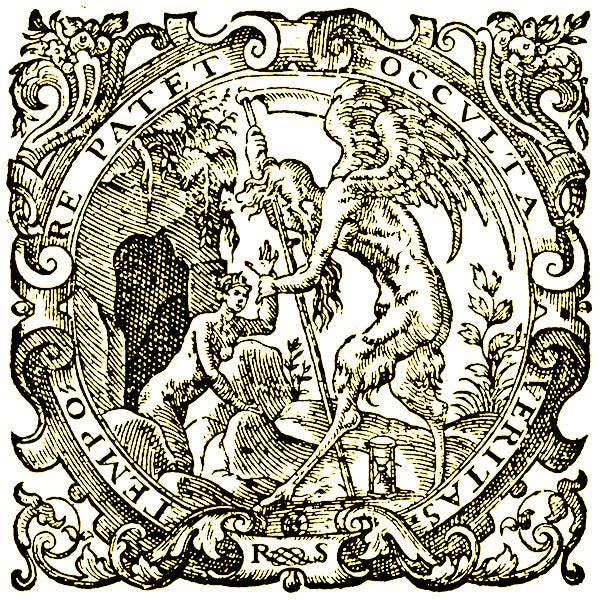
“Curious” as a compliment is surprisingly new. It sat for a millennium closer to sin than salvation. Einstein’s quip that “I have no special talents, I am only passionately curious,” would be concerning to Augustine, but ordinary to the early modern gentleman scientist.
During this period (roughly 1500–1800), it began to transform into an increasingly legitimate way of engaging with the world, even if they remained anxious about what counted as proper curiosity.
Curiosity was a cultivated virtue, provided it was disciplined. The ideal gentleman was expected to observe carefully, travel widely, collect thoughtfully, and converse intelligently. Increasing global exploration, collecting, natural history, and print culture created new social spaces where this disciplined curiosity could be displayed.
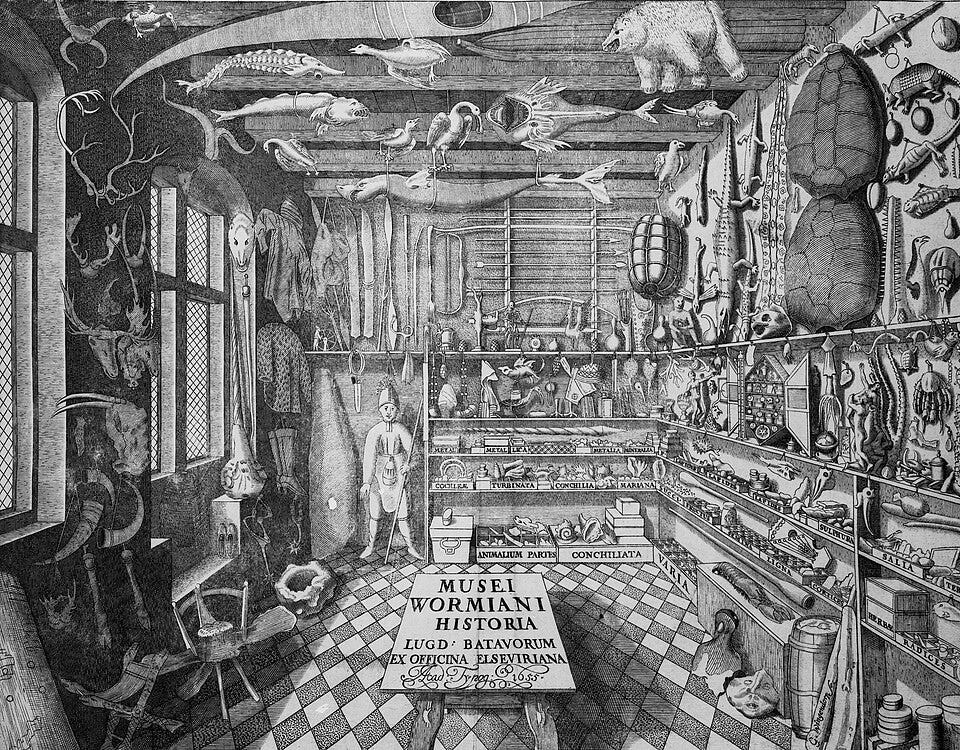
This introduces an element of social performance and etiquette to inquiry. Collections, including Curiosity Cabinets, became a way to represent the world in miniature and periodicals extolled the proper way of pursuing knowledge well.
Science did not only have to establish a process for producing reliable knowledge. It had to establish a recognizable type of person who could be trusted to produce it.
No. 411 The Spectator by Joseph Addison
But, as Socrates discovered, recognizable traits can make one the target of caricature. In 1676, Thomas Shadwell put the curious figure on a stage in The Virtuoso. His Sir Nicholas Gimcrack is a man consumed by experiments and discoveries. In the play, he lies on a table mimicking his observations of a frog swimming in a cup, having no intention of ever entering the water himself.
Robert Hooke, one of the leading experimentalists of the Royal Society, recognized himself.
Robert Hooke’s diary entry on June 2, 1676, after seeing The Virtuoso
The knower had become a particular type of person, and particular types of people can be judged not only by their discoveries, but by their character.
This moral tradition and its anxieties around curiosity haven’t vanished entirely. We share Bacon’s concerns with our moral preparedness for the enormous, godlike powers science gives us. We inherit Augustine’s idea that the internal state of the knower is meaningful. Some motivations are purer than others, even if the underlying object is the same. The qualities of the person asking still matter.
What’s going on inside the mind of the knowledge-seeker can even categorize funding lines, though auditing those motivations remains imperfect.
Why should a person support those who pursue questions?
So far, our concern has been on whether contemplation perfects the person doing it, but why should anyone else support that pursuit? Who pays the contemplator? Curiosity alone doesn’t buy food, even bread and lentils. Maybe I’m sick of bread, lentils, and sleeping in a barrel. Let’s try the flattering the king route.
If you were wealthy in Latin Christendom you might endow a chantry so priests would say masses for your soul. You built a chapel, funded a hospital, left land to a monastery.
For a long time, nobody endowed “research” because research was not yet a thing you could endow. It was something clerics did inside institutions that existed for other reasons. Inquiry happened in their margins.
In 1264, Walter de Merton, Chancellor of England, endowed a house of scholars at Oxford for the good of his soul and his family’s. Over the following century, four men worked out how to describe motion mathematically.
Nobody in their time was asking for this. It rode along on money given for something else. Galileo found their work useful three hundred years later.
At some point in between, the rewards patrons expected from inquiry began to move from the next life toward this one.
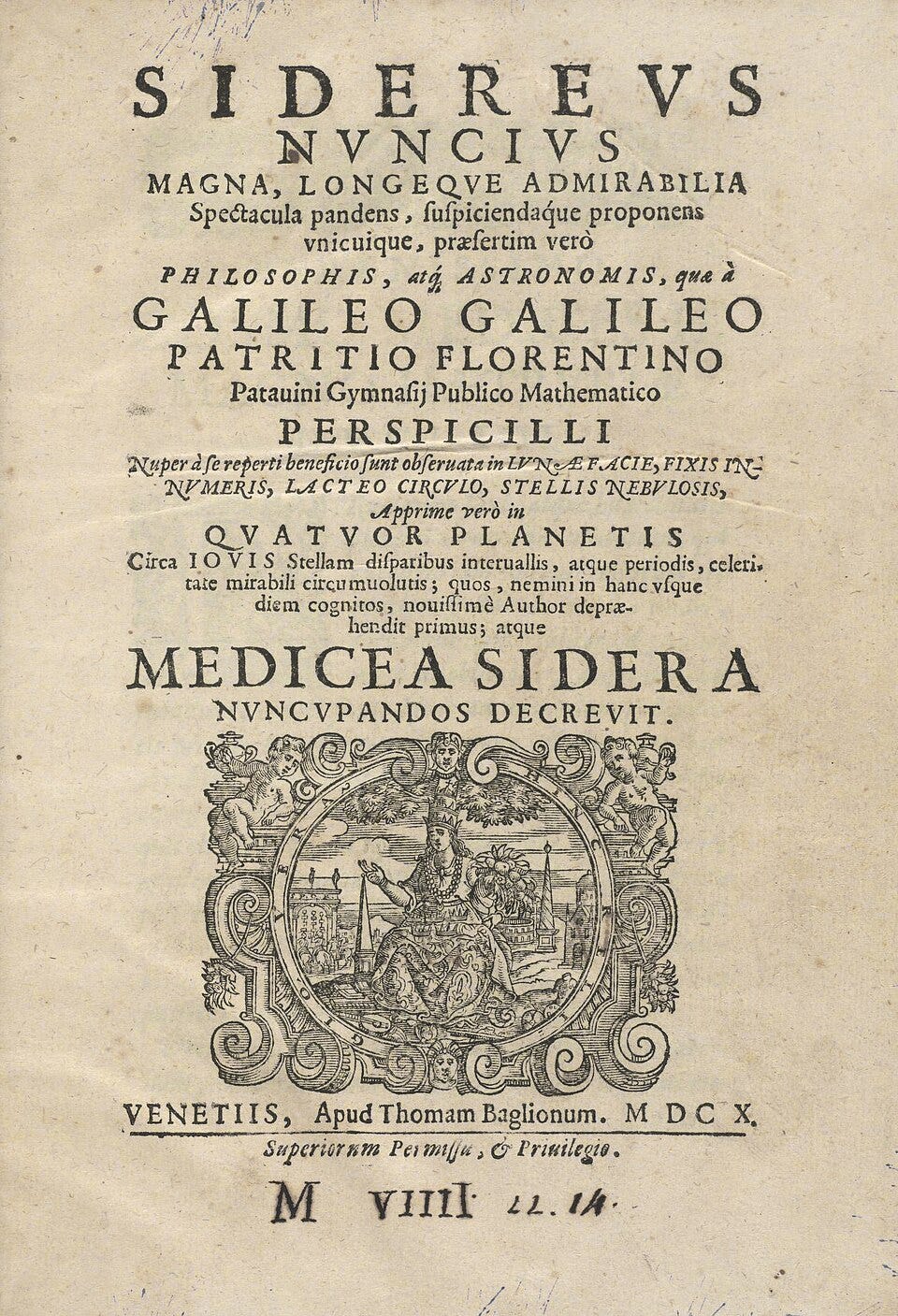
The first known scientific publication for research using a telescope was done by Galileo in 1610. It announced the discovery of four celestial bodies we know of as the Moons of Jupiter.
Cool find, Galileo. Is there any way to leverage this into something tangible?
Why not name it after Cosimo Medici? That guy’s pockets are deep. Or even better, name it after the whole family. Cosimo is one of four brothers, right? Four brothers, four stars. It works. And for about a century, they were known as the Medicean Stars. Like any good fundraising manager, Galileo sent along a telescope with the book so the family could see what they now owned.
“God graced me with being able, through such a singular sign, to reveal to my Lord my devotion and the desire I have that his glorious name live as equal among the stars.”
Written by Galileo to the secretary of Cosimo Medici
Galileo figured out how to make his research appropriable to his funder. But because of this value he gave, he expected some to be returned.
He requested a new appointment at the University of Pisa; a doubling of the rate of scudi flowing to his pocket; and a new title in the royal court, that of Philosopher rather than mere Mathematician. Mathematicians only compute after all. They don’t explain the nature of things.
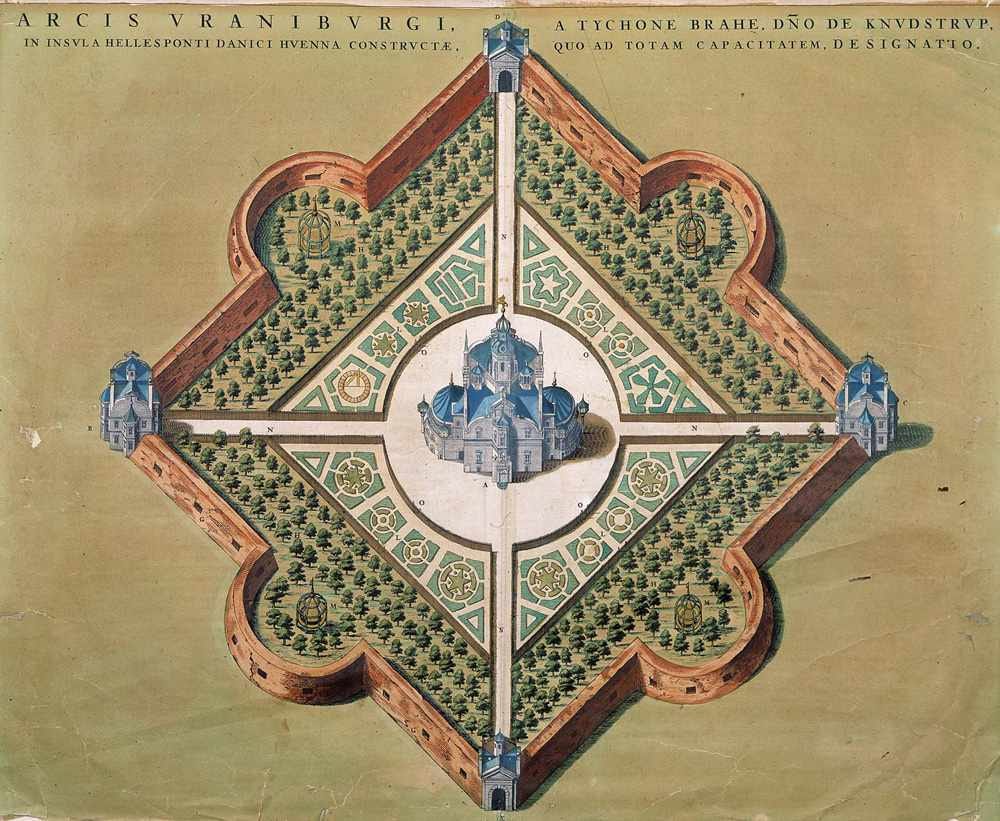
A bit self-dealing, sure, but the underlying innovation is rather startling. The justification for supporting inquiry need not be contained within the activity itself. It can come from somewhere else: salvation, prestige, power, or the prospect of useful knowledge. And these justifications can underwrite the involvement of others.
Justifications are also promises, and promises can be audited.
Enter our final satirist, Jonathan Swift. Swift, an Irishman, looked around at man’s estate and questioned whether the Royal Society was making good.
In the Academy of Lagado, projects are justified by promised improvement to human life. These promises underwrote projects like extracting sunlight from cucumbers, building houses from the roof downward, and finding ways to make food grow where it cannot.
In the fictional land of Balnibarbi, farming has been reorganized on the Academy's advice and its fields are barren. The only estate still producing anything belongs to Lord Munodi, who kept the old methods. Munodi is thought a fool for this.
The knowledge that works—the knowledge of the humble farmer derived from banausic labor—is the lower kind. The kind of knowledge that doesn’t work is higher. It’s ingenious, novel, theoretically impressive, and accompanied by an account of what it might someday accomplish. Munodi can only point to his harvest.
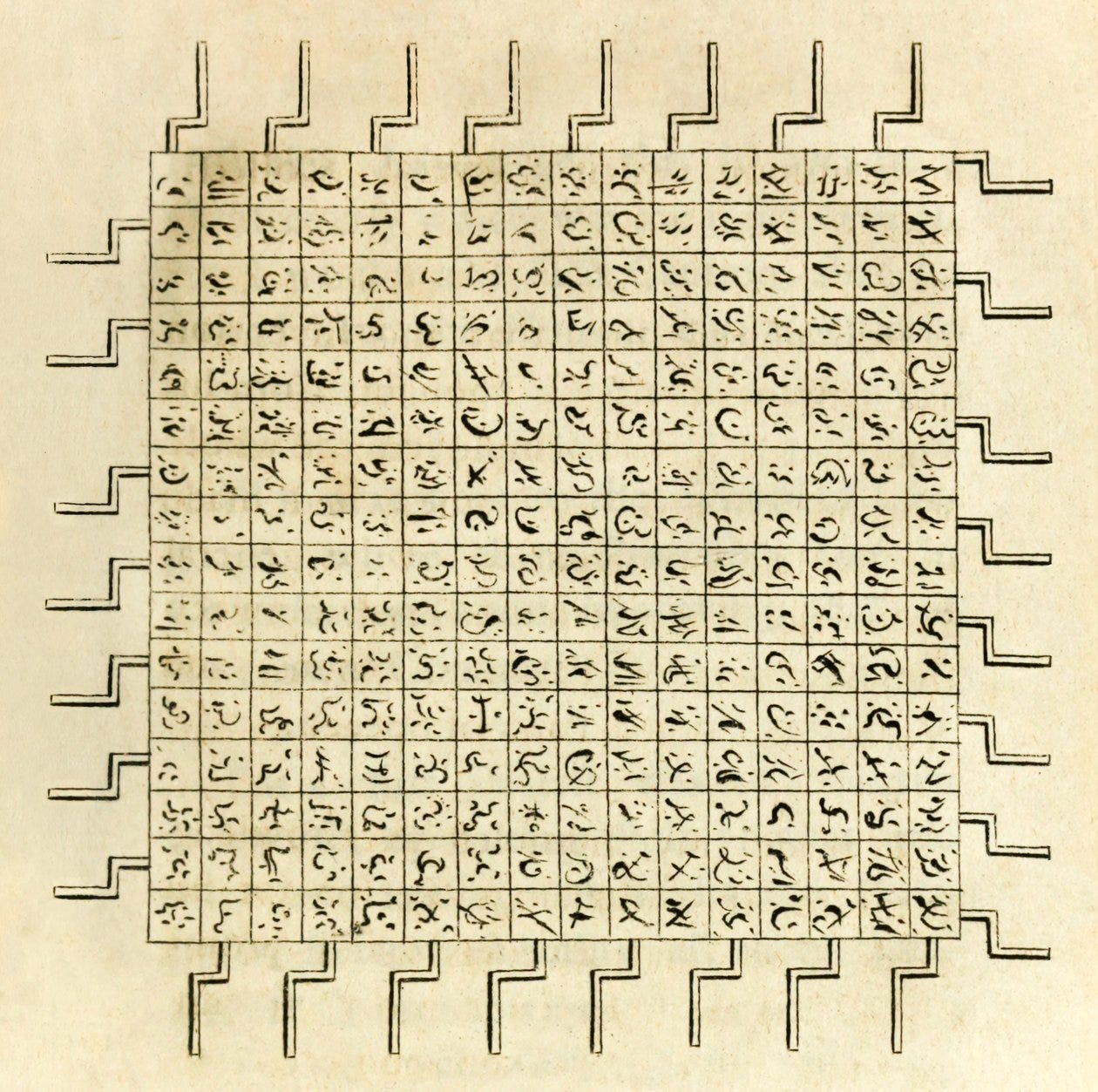
Once inquiry is supported by promises of future benefit, the promise itself can become part of the thing being rewarded. Not does this work? But does this sound like the sort of thing that might work?
Why should a society support those who pursue questions?
There’s a problem in involving other people in your curiosity. The person doing the inquiry wants to know something. The person paying for it wants something different, chiefly a return.
Demand too much justification, and you fund only what already looks useful. Demand too little, you get Lagado.
If we grant that sometimes these scientists stumble upon something useful, then who has the authority to decide what is worth knowing?
When Wilhelm von Humboldt set about organizing the new University of Berlin in 1810, he proposed that the state fund Wissenschaft, or knowledge pursued for its own sake.
Then, having funded it, you can please leave us alone. Thank you very much. Einsamkeit, Freiheit, and Bildung: solitude, freedom, and self-cultivation.
A nation cultivates itself through disinterested inquiry, and that only works if no one is standing over your shoulder asking what it’s all for. The state ought to pay; the state ought not decide.
Humboldt was pushing against the useful university: the school that exists to train officials and engineers, knowledge measured by the trades it feeds. Brotstudium, or study for bread.
In the late 1800s, curious Americans went to Germany by the boat-load and came home wanting the same thing. Johns Hopkins opened in 1876 as the first attempt, which is where we find our next figure, slightly appalled by his own country.
Henry Rowland was a professor of physics at Johns Hopkins who had studied in Germany. In August 1883, he stood at a lectern in Minneapolis and told the nation that it had, as yet, produced no science at all. He declined to dignify telegraphs and electric lights with the name of science.
Henry Rowland’s “A Plea for Pure Science”
The kinds of people American society celebrated were all wrong. Edison was a folk hero, but he was self-taught and of obscure intellectual origins. Application is beneath the genius. The potters are not the best of us. Rowland eventually got over himself.
About a year after Rowland’s speech, the engineer Robert Thurston presented a counterargument. Where Rowland imagined a hierarchy of pure science first with application following, Thurston insisted that the two could not so neatly be separated. The attempt to solve practical problems could itself be a mode of scientific inquiry and need not wait for science to produce usable knowledge. This Gilded Age quarrel, as nearly as these things can be dated, is the moment “pure” and “applied” harden into a matched pair.
During the Gilded Age, American inquiry was being institutionalized by private fortunes. Rockefeller, Carnegie, and other industrialists began endowing foundations to consecrate private wealth into permanent institutions. A great many Americans looked at this and saw menace.
In 1915, in the wake of the Ludlow massacre, the United States Commission on Industrial Relations, chaired by Frank Walsh, turned its attention to the foundations. For Walsh, a perpetual, tax-exempt institution could convert one family’s fortune into a claim on the public agenda. What should be studied, which social problems deserved attention, and what counted as knowledge worth producing are political questions.
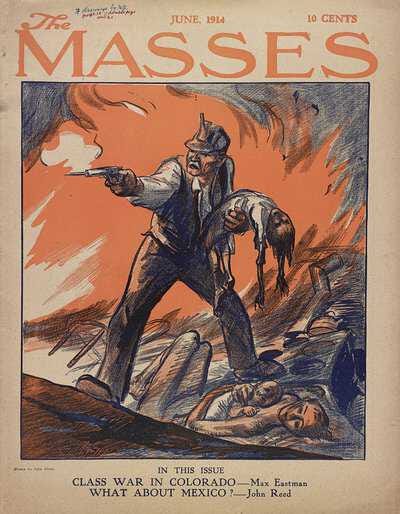
But is the public any good at answering these questions? The whole point of inquiry is that the answer is not yet known. If the public decides which questions will be useful, will they exclude the discoveries whose usefulness they can’t yet imagine?
Abraham Flexner thought this an impossible ask. To him, scientists were closer to poets and artists than engineers and accountants. If they thought about practical ends, they would be paralyzed. The life of the mind and of the spirit satisfy something in us beyond the material. The activity undertaken therein may appear useless to you, but in the scope of history can result in fortunes as yet unseen.
Abraham Flexner’s Usefulness of Useless Knowledge (1939)
The possibility of future usefulness is unknowable at the time of inquiry. Therefore usefulness cannot serve as the prior criterion for deciding what to fund.
The mathematician does not know what the engineer might need twenty years from now. Nor does the physicist know what problem the state will find itself desperate to solve.
Abstract work on nuclear physics, differential equations, probability, etc. can, suddenly, become bomb math.
Vannevar Bush was out there in the desert when it did.

This post was brought to you by Gavin Bryars’s The Sinking of the Titanic.