
While leaving class, I saw it. A bright yellow poster with pictures of smiling people sitting on furniture outdoors promising a weeklong design retreat in the Polish countryside. I said, “why not? Do it for the plot.”
I submitted an application portfolio of one-off DIY furniture builds, put together with basic tools and basic skill. In the weeks leading up to the retreat, I sweated over whether I’d be able to roll with a group of aspiring and professional designers. To self-soothe, I told myself that I could make up for the gap with enthusiasm and a blue, vintage work shirt with paint stains that weren’t mine.
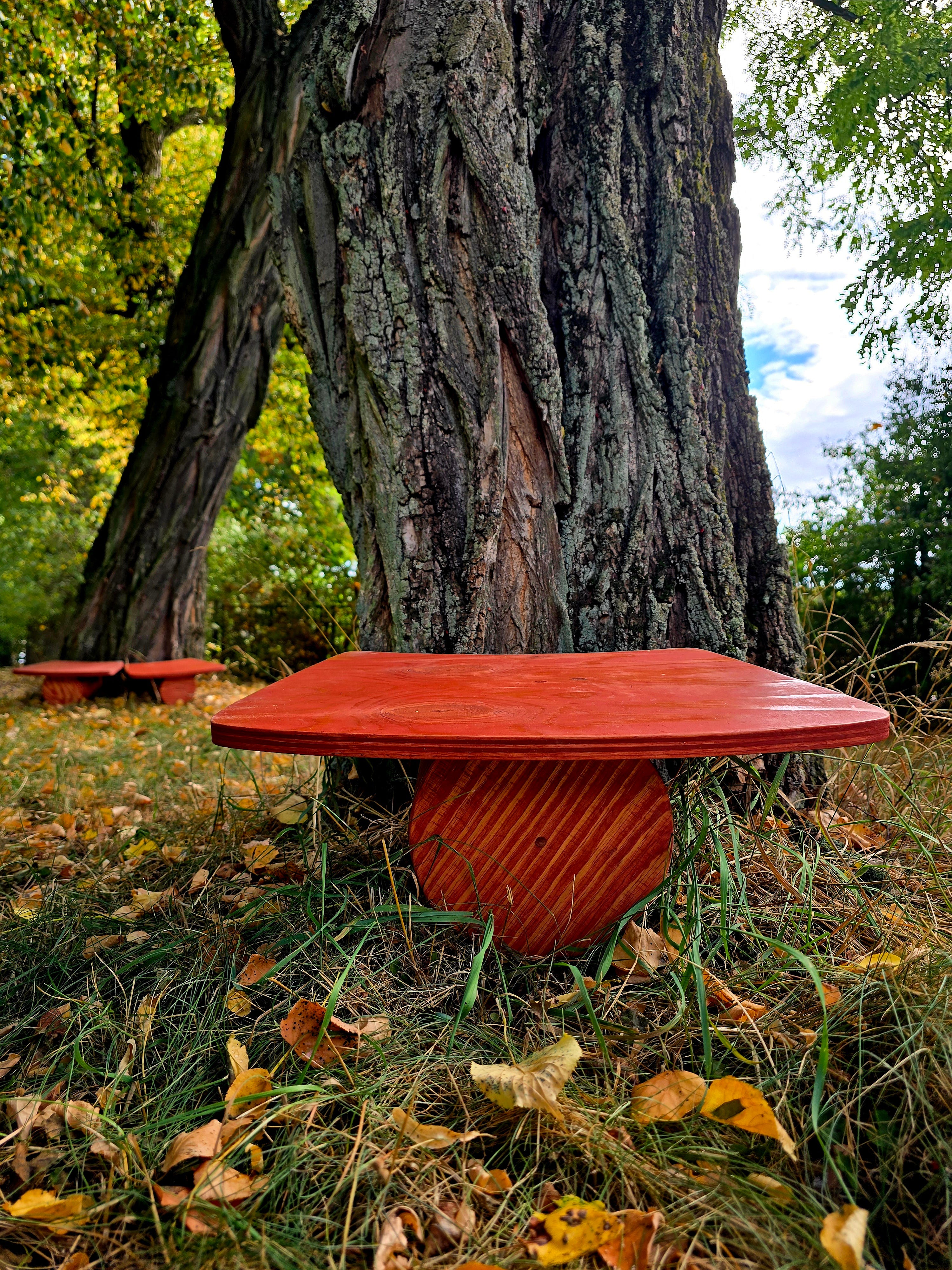
Nevertheless, the day came. Our work started by walking the property, finding interesting spots. The underside of a tree with a population of firebugs, a patch of ground by the sauna and stream, a neglected well. The idea was to choose from among those locations one that would be the focus of our designs for the remainder of the week. The well and a talented, professional designer would be my companions (you can find her work here).
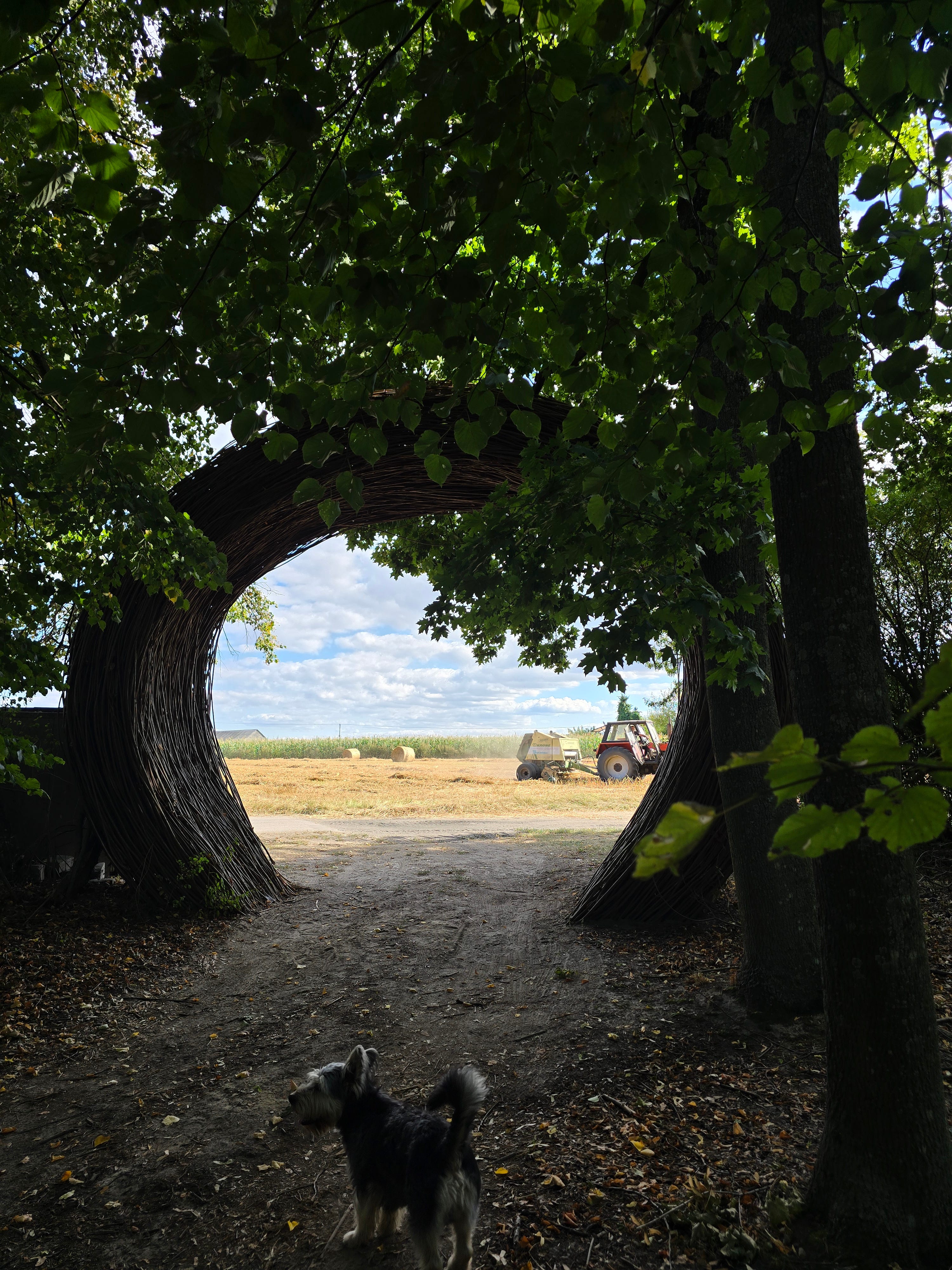
As someone enrolled in a business program, my justification for being there was clunky. By the second day, I landed on this: I’m researching organizational design for creativity in support of a thesis on corporate research labs. This was partly true. I’m unsure anyone was convinced.
On the third morning, during a 5Rhythms dance class, somewhere between the ecstatic gyrating of chaos and stillness, I realized I might be onto something. While staring down at the patterns in the grass, two things became clear.
One: the organizers had accomplished something remarkable. The social cost of looking stupid was run down to near zero, fast, giving people (including, maybe especially, myself) license to actually try things.
The other: the grass was suddenly inspiring. The looping patterns, the small spontaneous architecture of it, the texture under my hands and feet. These were inputs I was suddenly open to noticing.
It’s cliché to say we should pull inspiration from nature, in part because it glides over underlying mechanisms. It only works if there’s an individual openness to these weird inputs. For some, rocks are rocks, chickens are chickens. For Thorleif Schjelderup-Ebbe, a bored teenager spending the Norwegian summer at his grandma’s farm, they were the source of his insight on the pecking order. I would’ve just stared at clouds.
At that point, I realized the design of the retreat was as important as the design of the objects the retreat produced. The morning movement, the communal meals, the design meetings sitting in circles on the grass, the pastoral setting. These were deliberate choices, and therefore inputs to the creative process.
And this isn’t unique to arty retreats for designers. The same impulse to design the environment shows up wherever people are serious about creativity, though the stakes may vary. Mervin Kelly, of Bell Labs fame, wrote extensively about the physical design of the lab and how it was instrumental to creativity. Or Black Mountain College in the 40s, where Cage, Cunningham, and Rauschenberg, alongside their art, farmed their own food, built their own buildings, including Fuller’s first geodesic dome. These interventions don’t always work, and they don’t need to be elaborate. The coffeehouses of 17th-century London ran on penny entry and shared newspapers. Xerox PARC held meetings in a conference room filled with bean bags.
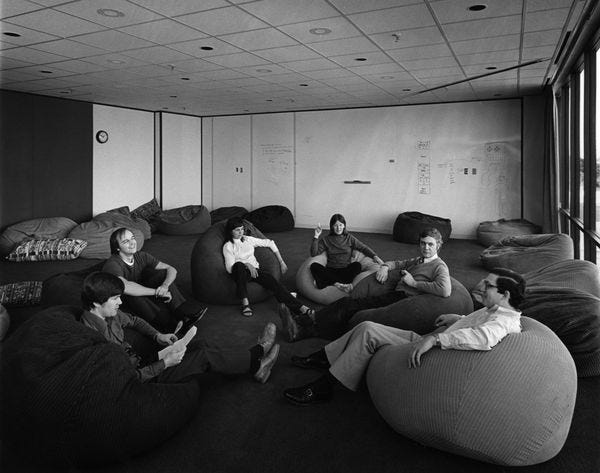
These are designed spaces in which openness becomes available, and maintaining that openness is as integral to the work as the work.
Back at the well, we wrote about what the space evoked. Storytelling, childhood, surrealism, and the crude shapes of the structure itself, a large cylinder with a comically oversized triangular roof.
We conceptualized and sketched. The first idea we presented to our lab directors was a set of large pieces with a point that could be driven into the dirt, a long back that arched towards the top, and a head. Basically bowing stick figures. They’d be arranged in a circle around a mirror to look like they were staring down a well, but could be plucked out of the ground and flipped over to make a rocker. Très conceptual. Très arty.
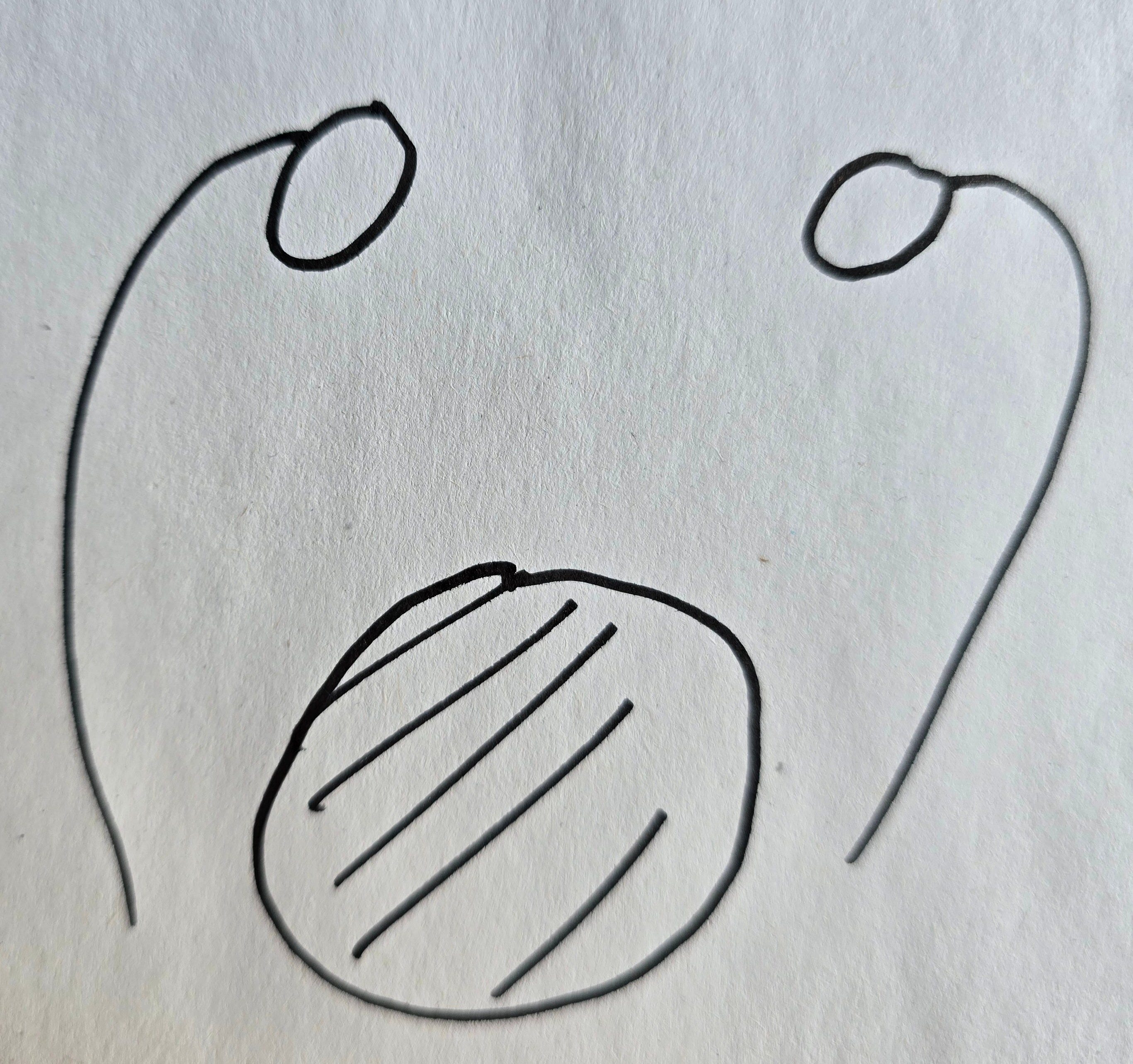
Misled by the beginner’s mind, I thought physically demonstrating what this looked like would help. So, first standing with my arms outstretched, back and head arched downwards, I flopped onto the ground and made the shape of the rocker. I don’t have access to their internal monologue, but from their expression it was something like this: “oh, we understood what you meant, it’s just a bad idea.” The dirt was too dry to reliably drive the point in. The pieces were reliant on a staged artificial presentation state to make sense.
The lab directors did something else, too: they pointed the groups towards reference designers worth drawing from. Isamu Noguchi’s playscapes, Donald Judd’s boxes, and, for the well project, the Shakers.
The Shakers emerged from a group of English dissenters led by former Quakers, and were sometimes derisively called “Shaking Quakers.” Their furniture was simple, humble, and built for use, premised on the idea that the act of making something well was itself a form of worship. Their chairs and tables now sit in design museums. They may have found this embarrassing.
Given this, we settled on a humbler ambition: a stool. One of the gems in the idea pile was to use the curve of the well in the dimensions of the seat. But what would be the base? We tested lots of options. Stark boxes with solid squared bases. One, an upright cylinder. The design didn’t land until we put the cylinder on its side and started rocking on the cardboard model. It made us laugh, which at that point in the week was what we needed.
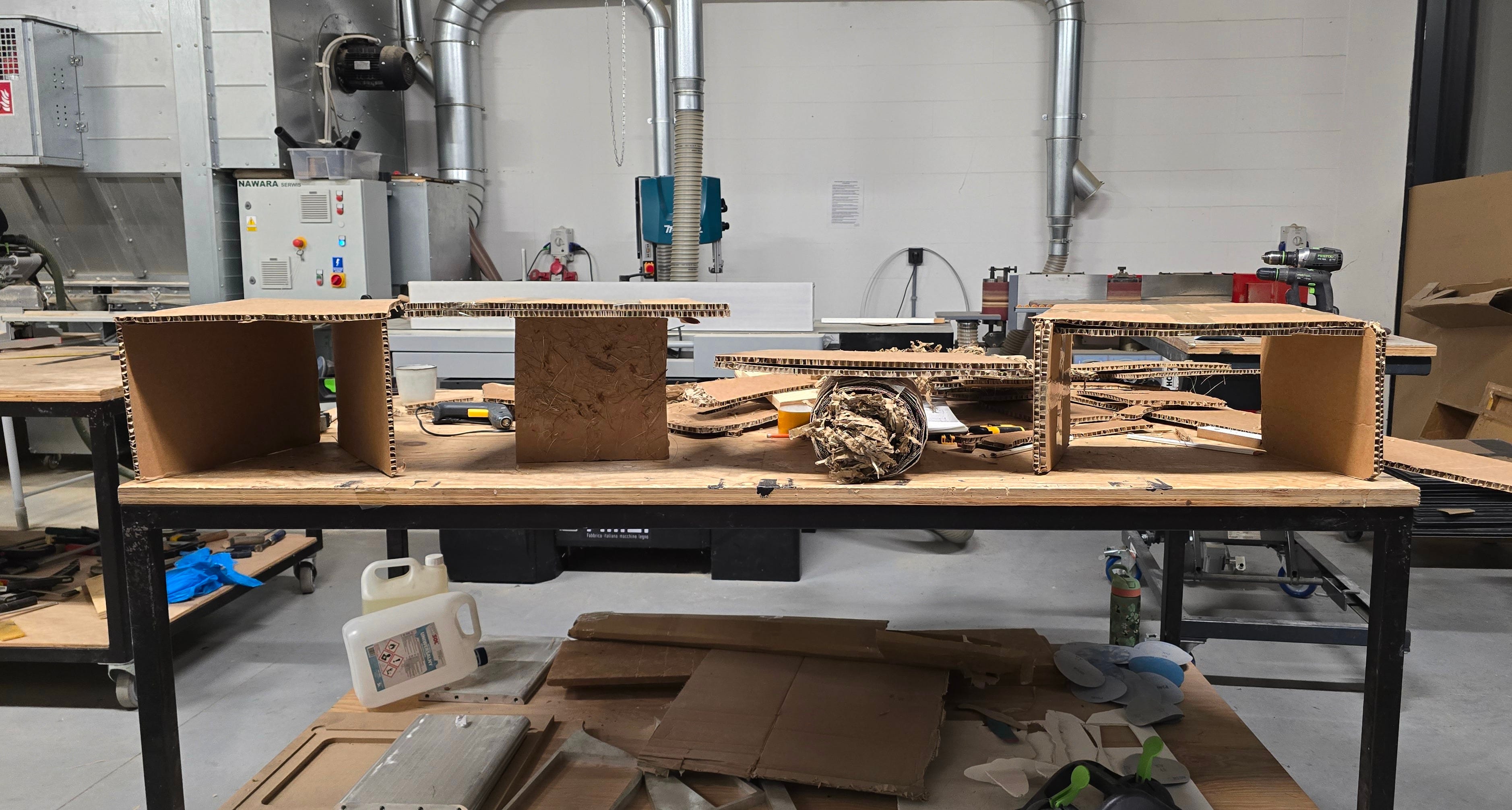
On build day, we scrambled to get everything fabricated and stained. Cutting and sanding thirty circles from scrap plywood, gluing in sets of ten to form the bases. The seat was cut, sanded, and secured to the bases with wooden pegs. At the workshop, craftsmen were on-hand to give advice on the builds and ensure that fingers stayed attached. Other teams buzzed around the workshop passing tools back and forth, competing for time with the CNC.
Creative environments tend to be surprisingly crowded. They’re filled with builders, designers, and researchers working in close proximity. Venkatesh Narayanamurti, a veteran of Bell, Sandia, and the founding dean of Harvard’s SEAS, calls this body-contact sport. The productive friction across expertise levels that generates new, better ideas. The lab director who points the researcher down an interesting alley. The craftsman who brings the designer back to reality.
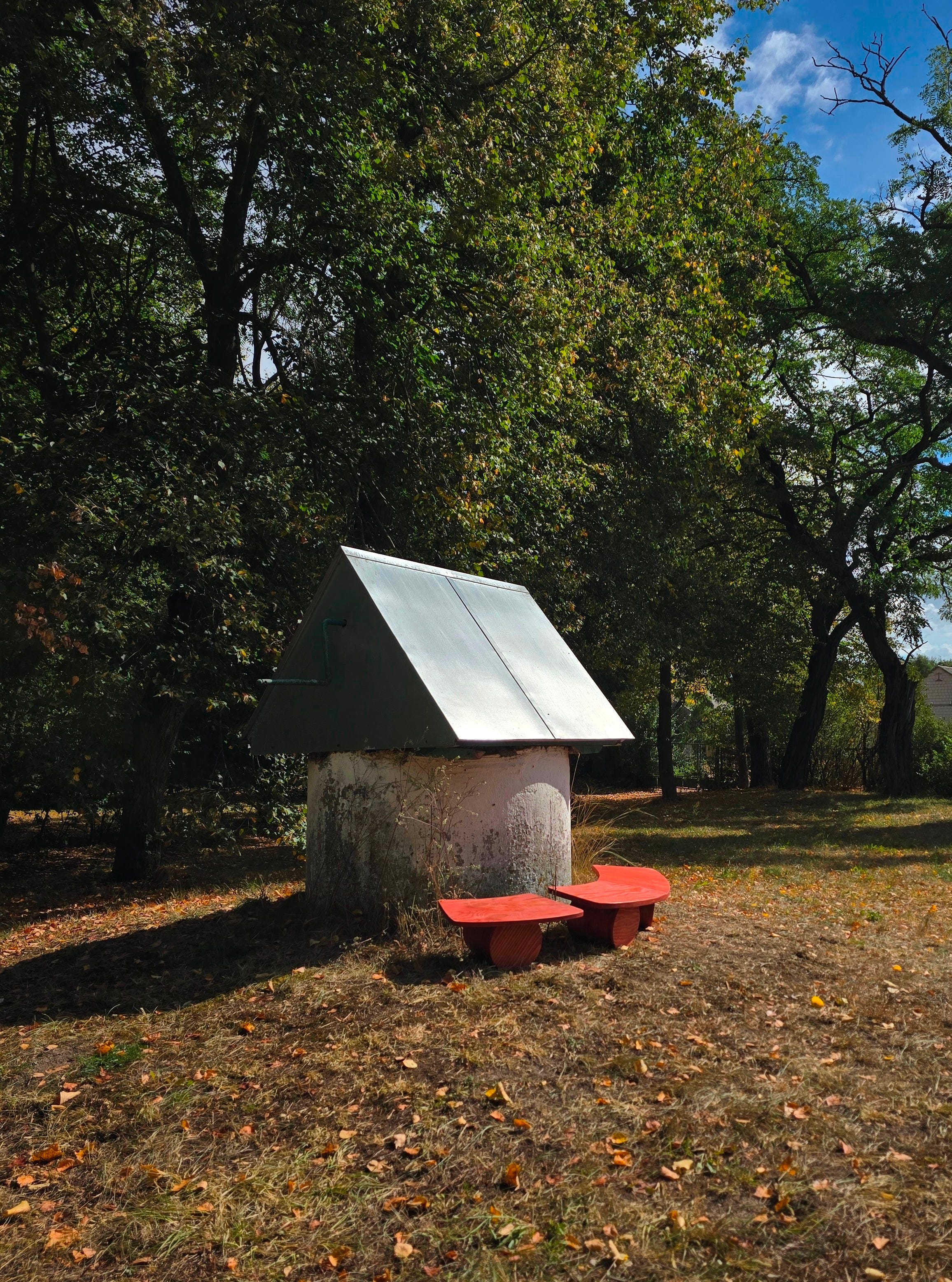
After the stain dried, the last hurdle was presenting to the group. Everyone sat in a large circle near the well. The stools were placed against it. I went to the well, grabbed a stool, brought it back to my spot, told a short story, and then returned the stool. My design partner followed the same pattern, sharing a brief anecdote instead. Then, our pre-conscripted lab director did the same, but put his legs in half-lotus and meditated in silence on the stool for a beat.
At that point, the pattern was clear, and the rest of the retreat-goers followed suit: they grabbed the stool, sat with it, and shared whatever they felt compelled to share.
This is actually a broad Quaker practice, where groups of worshippers sit in a circle in silence, sometimes for hours, until one feels compelled to speak. The Shakers added ecstatic dancing. Our presentation didn’t last as long, though someone did jump on the stool and ride it like a surfboard.
In the end, iteration was less about trying to stumble upon a good idea than about learning which instinct in a bad one was worth keeping.
From the flopping on the ground, we kept the seesaw. From the pile of ideas, the curve of the well. And from my attempt to blend in with designers, some stains on the work shirt of my own.